
by Sara Valle
The cool air of late May caresses your bare arms and your calves warm up as you pedal, dodging the cars. When you stop behind a red double-decker bus, a cloud of grey exhaust fumes hits you in the face. Now imagine all this but without the heavy traffic, the honking horns, and the sirens in the distance – that’s Christiania Bikes’ vision.
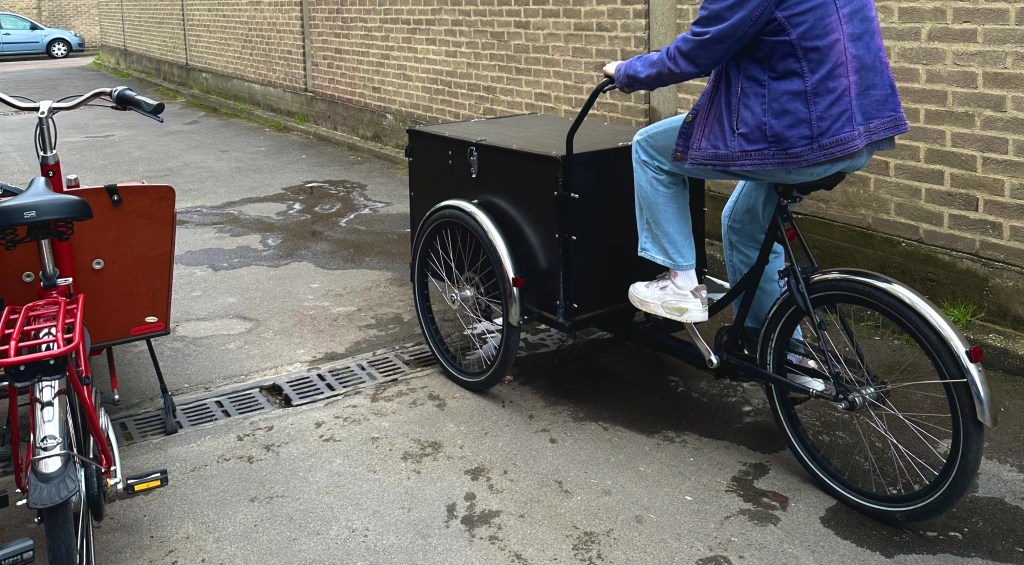
It all started 30 years ago. Danish blacksmith Lars Engstrøm made a cargo bike – an adult-sized tricycle that has a distinctive box-shaped cargo area located in the front, between the two front wheels – as a surprise birthday present for his girlfriend Annie. The trike took off, and ever since, cycling culture has been ingrained in the city of Christiania in Copenhagen, with Engstrom’s prototype as inspiration for the many different cargo bikes all over Denmark.

Christiania Bikes are designed to carry heavy loads and are commonly used for transporting goods, children, or even adults. They made their way to London in 1997 when a businessman bought one for home deliveries from his flagship grocery store. Some businesses are already using them for deliveries to adapt to London’s needs, with Gospel Oak’s Cooperation Town, a movement of community food co-ops, the pioneers when it comes to incorporating them to help others.
Cooperation Town and Christiania Bikes: Revolutionising food distribution
Richard G is the reason why these bikes have become the catalyst for a revolutionary delivery system in the UK. The veteran entrepreneur, who wants to remain anonymous as a behind-the-scenes kind of mover and shaker, believes efficiency and adaptability are the keys to transforming the landscape of a bustling city.
With a snowy mane and bold moustache, Richard looks like an explorer on the cusp of an extraordinary expedition. He radiates an aura of boundless creativity – a person whose mind is a perpetual garden of blossoming ideas.
“The Australians have the phrase ‘the tyranny of distance’ and economists have the theory of ‘the utility of space’, so I have been interested in how to turn the first one into the second one,” he says, nestled in the warm hub Cooperation Town, where he’s worked for over 20 years. “In London daytime traffic, the trike moves faster, cleaner, and cheaper than any other form of transport by far.”
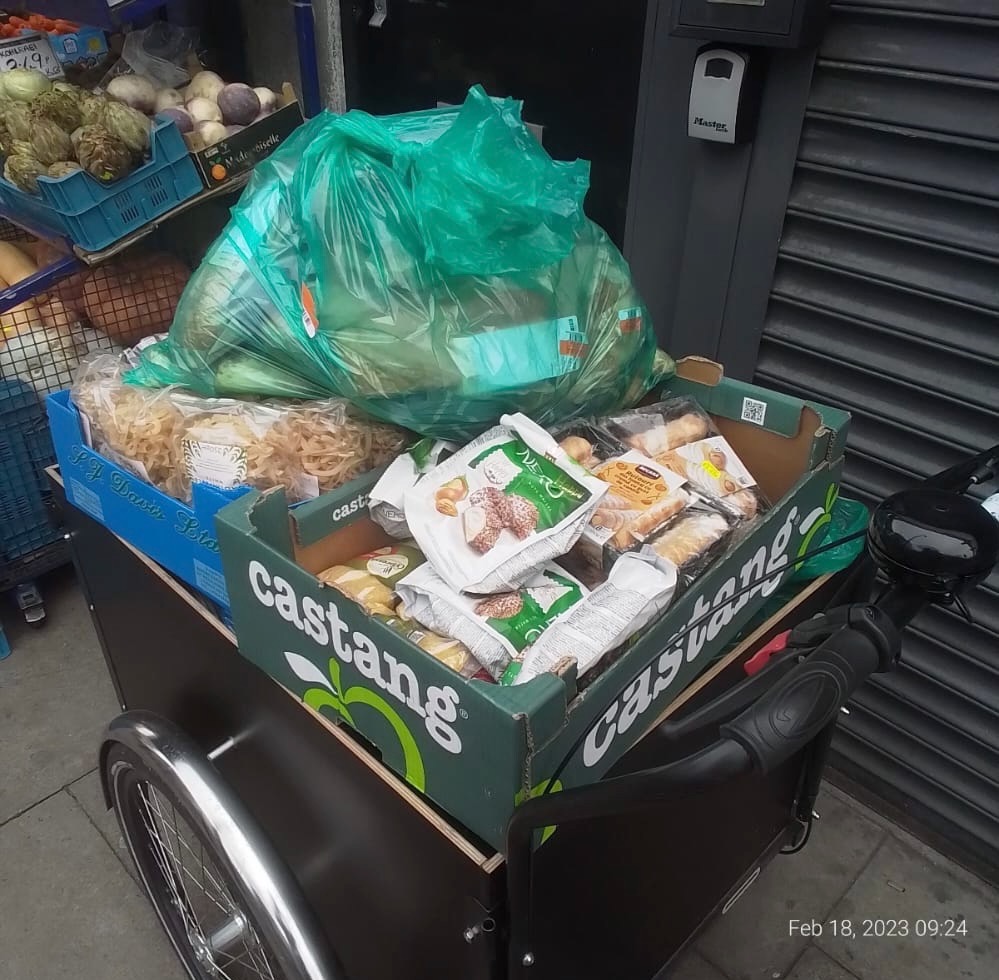


Richard believes that in a few years, Christiania Bikes will become part of the fabric of London streets, changing the way food is delivered to those in need in a more cost-effective way.
“If you’re somewhere busy on a bus, sometimes the traffic light will cycle through five times before the bus even gets through, whereas the Christiania bike is just narrow enough, I can weave through. I don’t cycle fast and reckless, but it can be very deft and subtle,” he explains.
People walk in and out of the room as he talks, carrying big carts of surplus food that later will be distributed to those in need. Katie Higgins, a petite young woman who works alongside him, is busy arranging crates but takes a few moments to speak.
“We’re trying to support people to organise with their neighbours to meet their own needs. And we know that, obviously, the cost of living, and food prices in particular have gone up massively. So, there’s a need to get affordable food and the food system is very messed up,” she says.
“There’s a lot of overproduction, which means there’s a lot of surplus food and most of it goes to waste.”
A unique approach to addressing food scarcity in London
Cooperation Town sets itself apart from food banks by embracing a unique approach. While both aim to tap into the invaluable resource of surplus food, they collaborate directly with individuals in local communities. These empowered communities self-organise to collect and redistribute the produce, redefining the way to address food scarcity in London. “It’s more of a grassroots thing,” says Katie.

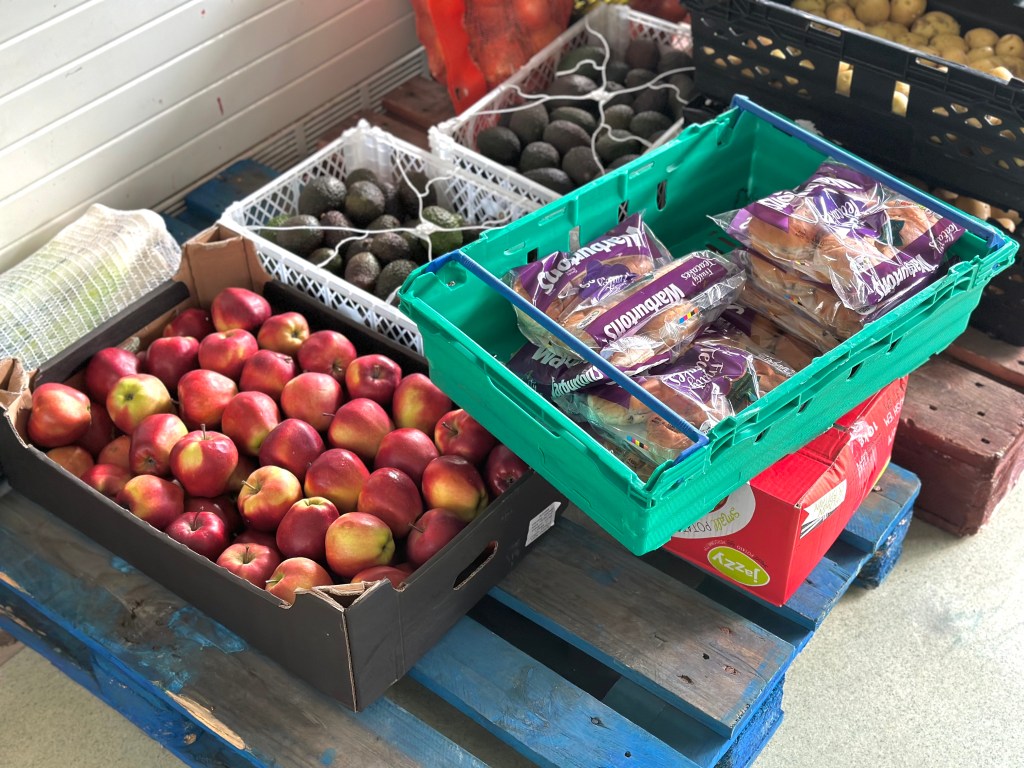

Some of Cooperation Town contributors are The Felix Project, His Church Leicestershire, Fresh ‘n’ Fruity in Stamford Hill, and Camden Council. But Richard is always looking for new ways to improve his ward. He’s not too keen on technology. He seems to believe that human connection is more important, as he talks about John Steinbeck and George Orwell “getting out of their chair” to find stories.
The main purpose for him is the same as for the dabbawalas, who believe “giving food is a great virtue”. He was inspired by this group of men in white with Gandhi caps who have conquered the streets of Mumbai for over a century, serving piping hot home-cooked meals with unrivalled precision. Born out of sheer necessity, their story is an ode to timeless traditions and unyielding determination. The most impressive part? There are no managers or tech involved.

Even though the dabbawalas don’t always use bikes, Richard thinks the integration of these “is an inevitable path” for a city like London, where food poverty is more of distribution problem instead of a scarcity matter. That’s how he found the cargo bike.
Community and mouth to mouth did the magic.
Pedalling philanthropy: The Christiania Bike connection
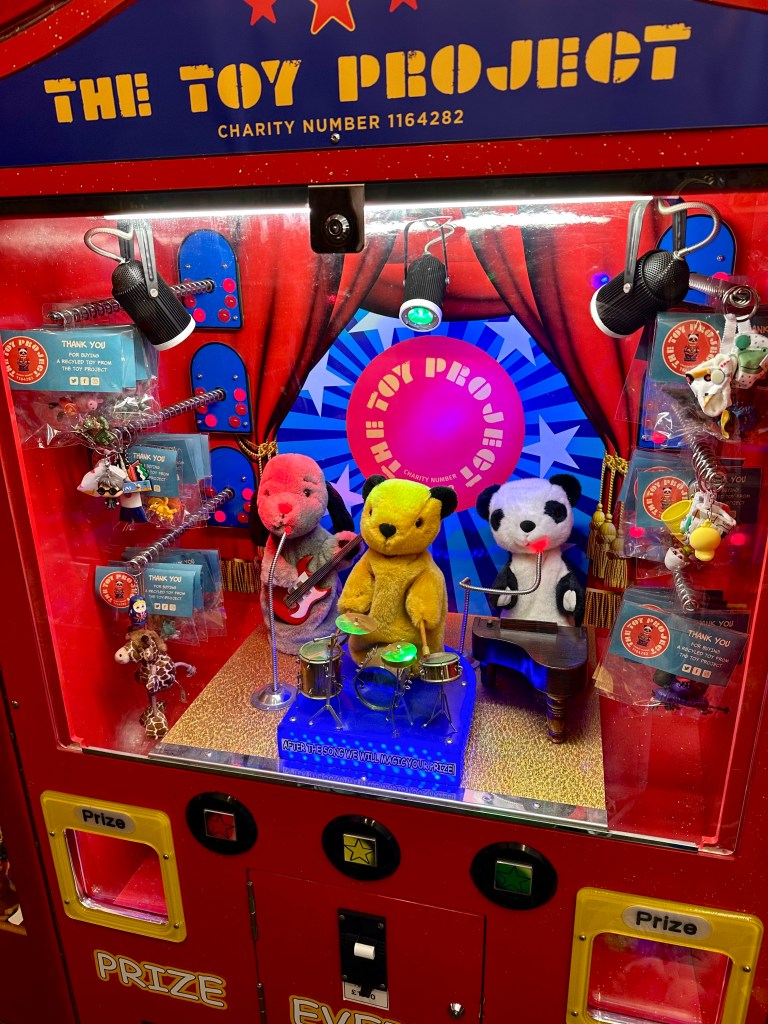
Just a walk away, in Archway, there’s a shop called The Toy Project. The small shop is cluttered with a curated collection of toy donations distributed to children who can’t afford them as well as organisations like Great Ormond Street Hospital in Central London. They’re pretty much part of the “waste less and reuse, repair, share and recycle more” mentality.


“I know Richard through his work at the Girdlestone Community Estate. I know that he goes and collects the food from different supermarkets that have excess food, and then he would take it in the cargo bike and back to the Estate to be given to residents and community members,” says Emma Howat, who works at The Toy Project.
They originally got their Christiania Bike from funding through ReLondon, a partnership of the Mayor of London and London’s boroughs to improve waste and resource management in the capital and accelerate the transition to a low carbon circular city. Richard was just in the right place at the right time for the bike to keep pedalling history throughout the city.
“They bought a Christiania Bike and they had to get it upgraded and generally they didn’t get that much out of it. They only used it one day a week or so,” says Richard. “We’ve got a warehouse for a garage and they said look after it and use it. So that happened.”
The Christiania Bike originally came from London Green Cycles, a small shop close to Regent’s Park. Lindsay Fink, the blue-eyed shopkeeper behind the counter, remembers Richard as well as Lilly Lambert, the manager at The Toy Store. “I think I did the test-ride with her,” she nods.

Lindsay believes these bikes offer flexibility for users and the possibility of reducing pollution. She argues people who think they’re too expensive are oftentimes the first one to pay thousands for a car.
Is London a cycling city?
“A lot of the bikes we sell are electric, they’re much more sustainable, they take a lot less energy compared to a car, they cost a lot less to maintain and also to power,” Lindsay says. “I would say they’re just much lighter on the earth and much lighter on your community as well compared to a massive car that takes a lot of space and makes a lot of emissions.”

But London has nothing to do with Christiania, a little bohemian wonderland of freedom and creativity nestled in Copenhagen, where streets are car-free. In a hectic city like London, juggling the needs of every cyclist is a hard task.
Since 2010, the city has invested significantly on cycleways as well as the launch of the “Boris bikes” that added 8,000 bicycles to the network. But some of areas of London still lag in providing a safe space for cycling.
The constant fight to battle climate change and pollution levels has been at the forefront of London Mayor’s agenda. Some worry the cost-of-living crisis is hampering the change and others worry their budgets are going to dramatically be slashed when the new ULEZ measures are in place.
These bikes cost around £2,000, but Lindsay argues they’re a safe long-term “cheaper than a car” investment. And Richard would agree. “If you use a bike, the whole raft of legislation just disappears,” he says, adding that Gospel Oak’s Cooperation Town is working to crowdfund money for a new bike to make helping others and fighting pollution possible.
These cargo bikes might not be everyone’s cup of tea, but they’re slowly but steadily starting to take over London. They could potentially be the force that drives the change, one pedal at a time.t a new Christiania bike for his Cooperation Town.
Link to published article: https://hollowayexpress.org.uk/pedalling-against-food-poverty-gospel-oaks-cooperation-town-delivers-hope-on-two-wheels-tackling-scarcity-and-pollution-in-perfect-tandem/
 SARA VALLE
Leave a comment